Sometimes it is hard to remember what I have written here and what I haven’t. Yesterday, for instance, my friend Mike asked how I carry around my notebook and pen. In my reply, I joked that my answer deserved a post of its own. Then I got to thinking it wasn’t really a joke. I could write a post about what I carry around in my pockets every day. I could write about the annoyances of having to pull all of that stuff out, clown-car style, each time I pass through a security checkpoint. I could tell of the amused looks I get when I pull things out of every pocket on my person. I even came up with a perfect title: What’s In Your Pocket.
But you’re ahead of me already. As I am wont to do these days, I did a quick search of the blog for the term “pocket” and almost immediately found a 2016 post titled–wait for it–“What’s in Your Pocket?” in which I wrote about what I carry around in my pockets, the annoyances about having to pull it all out at security check points, the amusing looks, etc., etc.
Instead, I decided I should stick to Mike’s question–and his comment. Mike asked:
how do you carry your notebook and writing implement? As one with ink stains in places they don’t want and who detests rumpled corners and bent pages, I’m always on the hunt for the best way to, well, carry.
Believe it or not, I’ve been asked this question frequently, perhaps because I’ve written about my Field Notes notebooks frequently. The answer is that I carry the notebook in my back left pocket. I’ve been keeping it there for the better part of seven years now. On the rare instances when I discover it isn’t there, I get that unsettled feeling one gets when one realizes keys or phone is missing. Along with the notebook, I slip two pens into the same pocket, one black, and one blue ink Pilot G-2 0.7.
I think Mike might have been looking for a better answer than “in my back pocket along with my pens.” He was looking for a way to protect both this clothes and the integrity of his notebook from the destructive forces a pocket can apply to page corners, covers, and the like. But to me, this is part of the beauty of using a notebook in the first place. I want my notebook to be well-used. It should look battered and ink-stained. I think of that scene from Raider’s of the Lost Ark when Indiana Jones pulls out his field notebook and with pencil between teeth, begins flipping pages. His is the notebook of an active field archeologist. My notebooks, battered though they are, reflect how much I use them.
I pulled a random stack of my used notebooks from the shelf and spread them out to illustrate just how battered they get over the course of their lives in the confines of my back pocket. Fanned across the top are a random collection. Below them is my current notebook, about two-thirds of the way filled.

To see just how well-worn these notebooks get, here are some close, more detailed shots. In the first two images, you can see how battered the notebooks get. I love this about them. They start out almost pristine, and there is nothing quite like starting a new notebook. But as I use them, it shows. The third image shows some extremes, as in where I have to take the cover of the notebook so that it stays on.
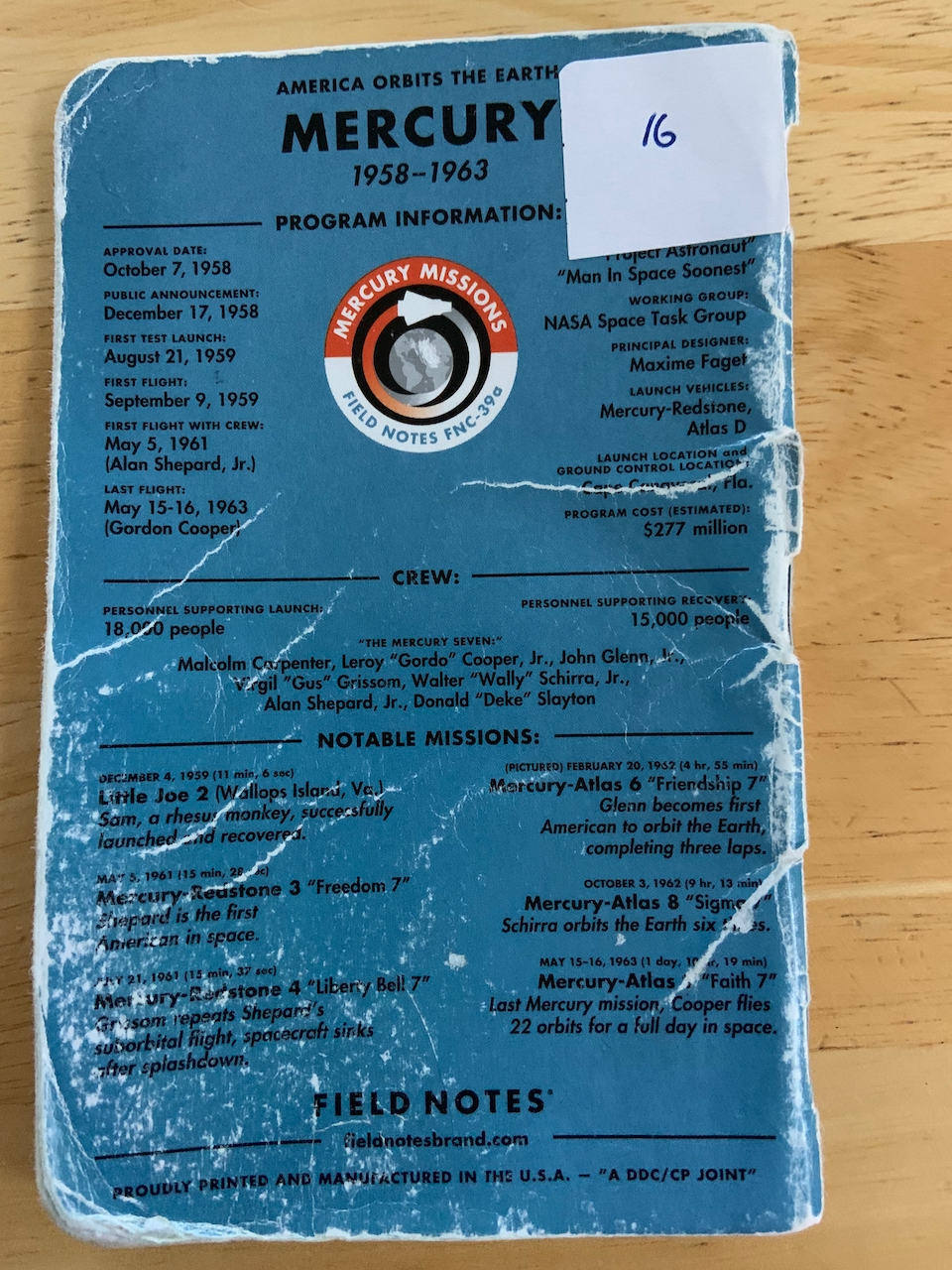


My pockets get ink-stained as well. Not huge stains of ink, but small, black and blue stains where the points of the pens touch the fabric when they are exposed. This is the cost of doing business. This is like Indiana Jones’s dusty hat and outfit showing the rigors of his labor. Kelly and the kids have come to accept these ink stains and no one else asks about them, although I’d be happy to explain them if they did.
This is probably a long answer than what Mike was looking for, and maybe not the answer he was looking for either. If there are readers out there who, like Mike, prefer to keep their notebooks wrinkle-free and clothes ink-free while carrying around your notebook, please drop your suggestions for how you do this in the comments. And meanwhile, if you are looking for some more good stuff to read, you can check out Mike’s blog.
Did you enjoy this post?
If so, consider subscribing to the blog using the form below or clicking on the button below to follow the blog. And consider telling a friend about it. Already a reader or subscriber to the blog? Thanks for reading!
Leave a Reply to Jamie Todd RubinCancel reply